logo

Smart Air Environment Monitoring AI Robot

A public environmental monitoring solution where autonomous robots move through outdoor spaces to collect environmental data, analyzed by AI


What is this solution?

The Smart Air Environment Monitoring AI Robot is a solution that autonomously patrols outdoor spaces such as parks, waterfront areas, and urban forests used by citizens, collecting environmental data.
The collected data is analyzed by AI to identify environmental anomalies and provide necessary environmental information to administrators and citizens.
It detects spatial environmental changes that are difficult to identify with fixed sensors alone, supporting public environmental management and citizen safety services.

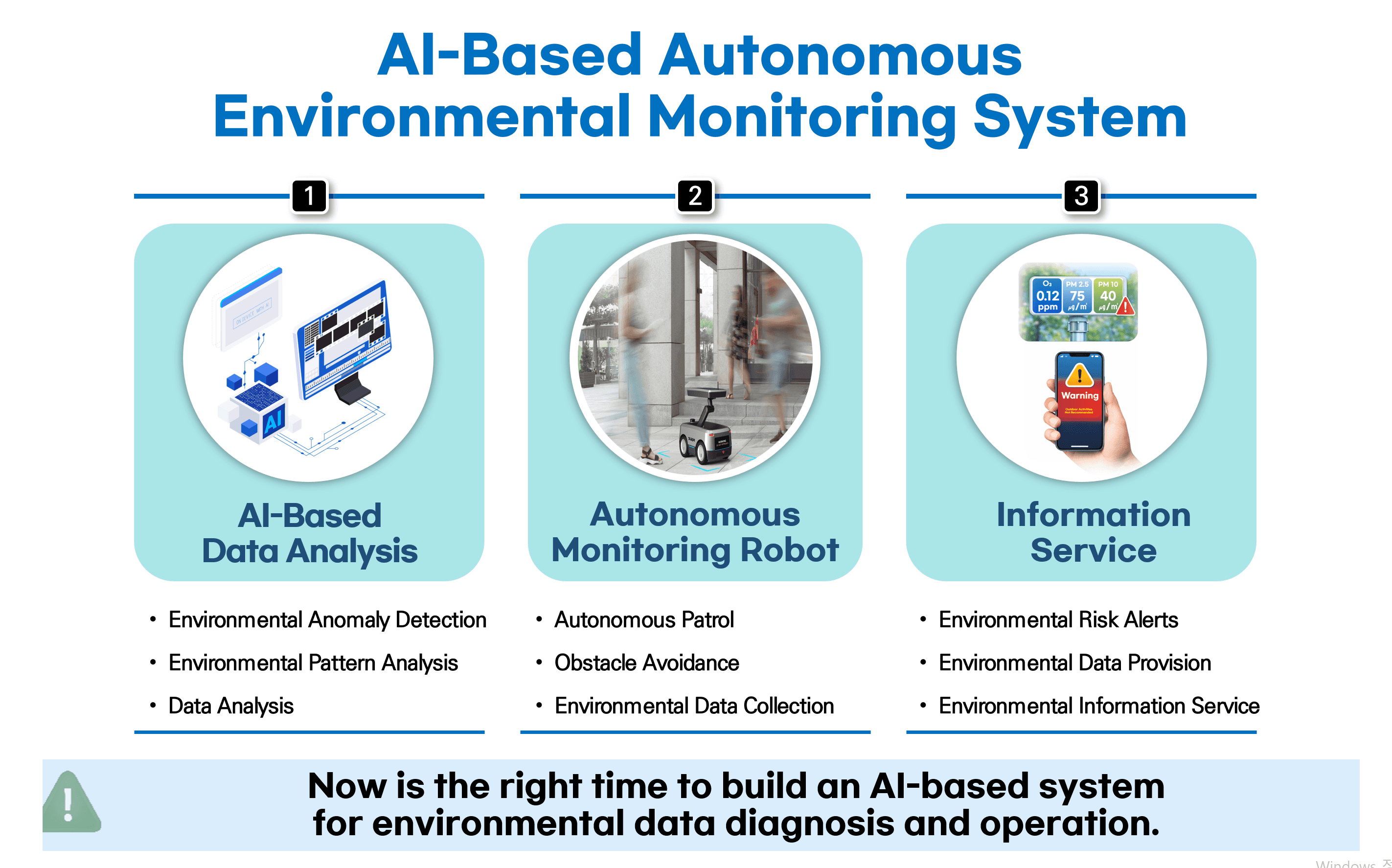
AI-Based Autonomous Environmental Monitoring System
AI-Based Autonomous Environmental Monitoring System diagram
1
Autonomous robot patrols target areas such as parks, waterfront spaces, and urban forests
2
Collects key environmental data on-site including temperature, humidity, fine dust, and ozone
3
AI analyzes collected environmental data to detect anomalies and environmental changes
4
Provides environmental status and risk alert information to administrators and citizens

Service Configuration

1
Environmental Data Collection
Collects on-site air quality data through various environmental sensors.
2
Autonomous Monitoring
Patrols designated areas to monitor environmental conditions across wide spaces.
3
Environmental Information Delivery
Provides environmental risk situations and monitoring results as alerts and visualized information.
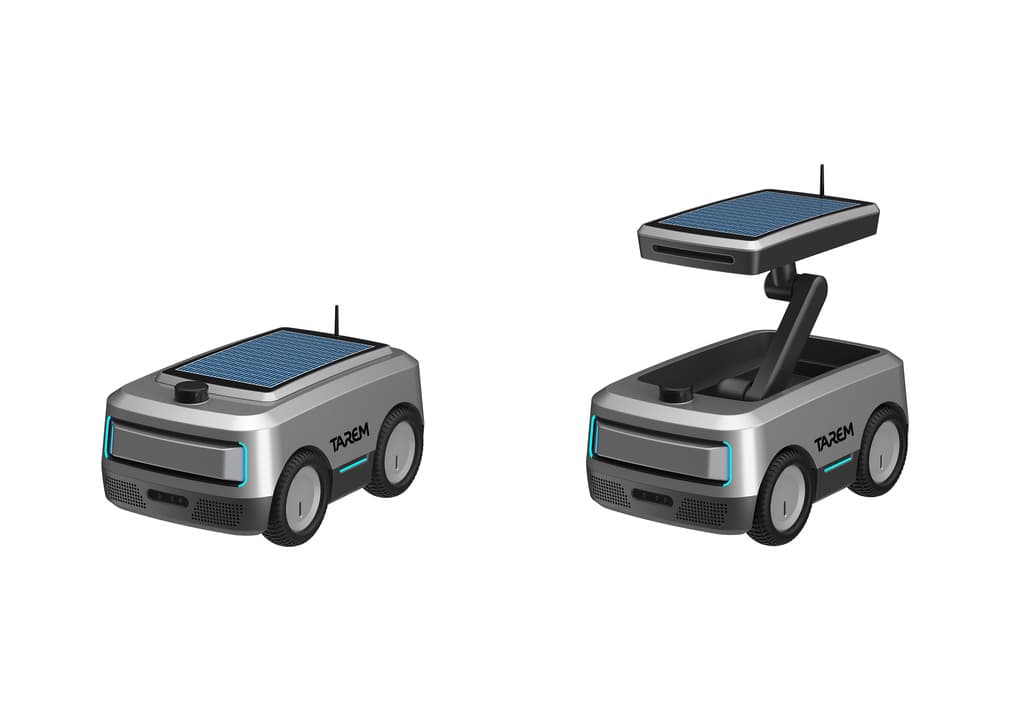
Autonomous Environmental Monitoring Robot
Outdoor Environmental Monitoring Service
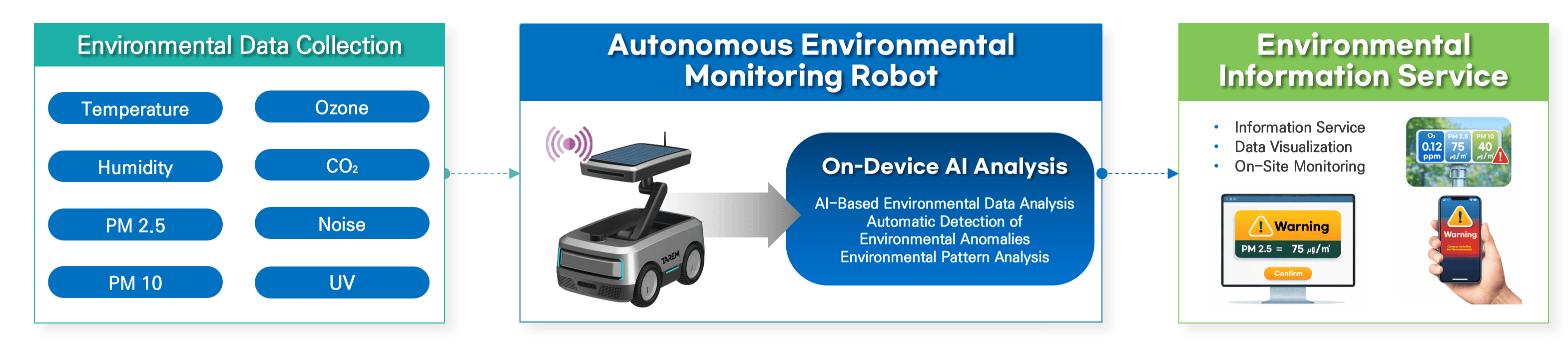
Autonomous Driving-Based Environmental Monitoring Service Structure
Autonomous Driving-Based Environmental Monitoring Service Structure diagram

How does it work?

1. The autonomous robot patrols designated areas while collecting environmental data.
2. Collected data is analyzed by AI to identify environmental changes and anomalies.
3. When an environmental risk is detected, alerts can be sent to administrators.
4. Analyzed environmental information is utilized for citizen guidance, on-site monitoring, and public management services.

Use Cases

Urban Parks
Lake Parks
Urban Forests
Waterfront Spaces
Smart Cities
Public Facility Management

Key Strengths

point
Mobile Environmental Data Collection
Robots move through spaces to collect environmental changes that are difficult to detect with fixed monitoring equipment alone.
point
AI-Based Environmental Anomaly Detection
Analyzes collected environmental data to quickly identify abnormal conditions such as fine dust, ozone, and heat stress.
point
Automated Public Space Monitoring
Repeatedly monitors environmental conditions across wide spaces like parks, lake parks, and urban forests.
point
Environmental Information Service
Analyzed environmental information can be linked to administrator dashboards, on-site guidance, and citizen alert services.
point
Smart City Service Scalability
Can be expanded into various public services including urban environmental management, public safety, and park management.

607, Engineering Building 1, 77 Yongbong-ro, Buk-gu, Gwangju (Yongbong-dong, Chonnam National University)
Company : WVR Co., Ltd.Tel: 062-716-7702
© WVR Co., Ltd. All rights reserved.
top-arrow